
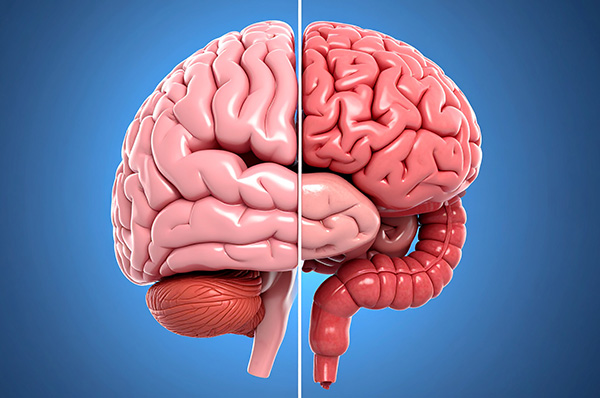
The brain-gut axis is the communication channel between your gut and your brain. Through nerves, neurotransmitters and hormones, such as cortisol and serotonin, these two organs are in contact with each other throughout the day. This interaction is of great importance. It affects how you deal with stress, how your mood is and how well your digestion functions.
It is not for nothing that the intestines are also called the ‘second brain’: they play a crucial role in our physical and mental well-being. A lot of research has already been done on this and a recent study by Magda Ioannou also shows that physical processes, such as inflammation and intestinal health, are strongly associated with disorders such as schizophrenia and bipolar disorder.
For example, she found signs of a disturbed immune system in patients: abnormal immune cells, stronger reactions to viruses and early oxidative stress. She also saw that people with mental disorders often have a different intestinal flora than healthy people. Harmful bacteria are more common, useful ones are less common.
Supporting the immune system and the gut, for example through probiotics, healthy diet, exercise and anti-inflammatory treatments, can be a valuable addition to existing therapies, according to Ioannou. Pilot studies showed that probiotics are safe, strengthen the intestinal wall and can even improve memory. In addition, the composition of a person’s intestinal flora was found to determine in advance how well such a treatment is effective.
Magda Ioannou received her PhD from the University of Groningen on Wednesday 3 September. Parts of the thesis ‘Unravelling the immune-gut-brain axis in severe mental illness: From mechanisms to treatment‘ by Magda Ioannou can be found on the website of the University of Groningen.
Source: University of Groningen, 29-08-2025


